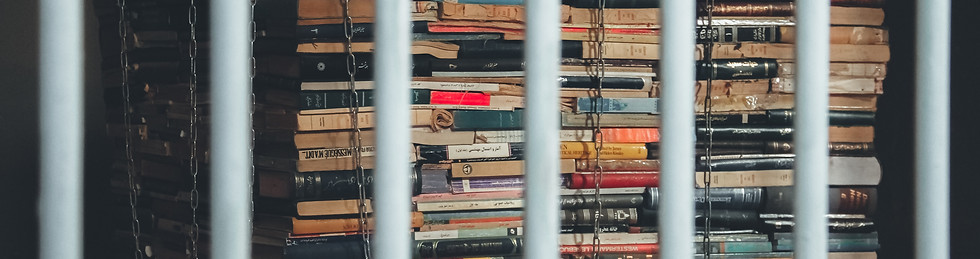
THE HUMANITY ISSUE:
ODE D'1954
WE RECOMMEND USING A DESKTOP BROWSER FOR THE BEST READING EXPERIENCE.
EDITOR'S NOTE
To censor voices is to censor the lived experience.
In Alberta schools, we’re being told whose voices are acceptable for consumption.
Being adamantly against this, FOE handed the megaphone to potentially silenced,
repressed, or challenged voices and published their stories. Our solo publication,
“The Humanity Issue: Ode d’1954” delivers works that challenge convention, censorship, and complacency. The selected submissions boldly critique objectification,
domestication, subjugation, zoochosis, homophobia, transphobia, corporate greed,
the patriarchy, and the violation of bodily autonomy.
But within these pieces, there is also hope and a deep-bellied rallying cry to protect the very thing that makes us human: our freedom to choose.
“The Humanity Issue: Ode d’1954” is an incredibly moving collection of creative works.
We hope you enjoy them and that they inspire you to keep up the good fight.
And never forget that the freedom of expression is nothing without the freedom to consume, FOE FOC’s sake. :)
Stay loud,
Cait Yaga
Editor-in-Chief
FOE Lit Mag
A LETTER
TO THE HISTORIAN THAT KILLED ME TWICE
I give you structure, yet cannot stand
on my own.
I live in classrooms, in museums, underground and under your skin.
I am only born
<stillborn>
once your heart stops beating.
Who am I?
You lowered your head for the yoke
of forgetting.
Your shoulders bow under the weight
of centuries past, of explorers and warlords, of ministers and kings.
Sweat drips from your brow and blurs your eyes with the sting
of an ice pick
until all you can see of me is a limp
ivory smear.
You say:
You are dead.
What little skin you have left
is shrink-wrapped around the stains your muscles left behind. Your brain
leaked through your ears and soaked the soil and filled the bellies of maggots until your mind
was replaced by a cavernous echo. You are
dead
and you have no lips; therefore, I
will speak for you.
My jaw aches
<the catch on a door rusted shut>
Fury burrows into the hinge where it connects to my skull.
You drag me on that stage and dangle me before your peers.
You tell stories I’ve never heard, and only when I look at the sea of sneering faces do I realize
I am the protagonist.
You smile wider
than them all, but when a stray draft twists me around to face you,
I see you crawling six feet under
to escape the shame.
I am not dead.
Death does not come naturally to me.
Death is when you grind me up and say
there are no bones left.
THE FEMININE CURSE
CONTENT WARNINGS: Implied sa, religion
We are sick
of honey lemon IVs, of doctors’ promises and get-well-soon schemes, of stories of this
also happened to my niece
we are sick
of false sympathies, of thoughts and prayers and stuffed teddy bears, of I am holier than thou because I visited you in your despair
we are sick.
But we are not gone.
We just needed an escape from overarching shadows grumbling angry day after day,
telling us we’re good for nothing, just a coffin princess setting tables, digging graves, feeding babes
we are sick
of you telling us what to do, how to live, when to take, what to give, and when
now now NOW NOW
we are sick.
We need a moment to
b r e a t h e
give us oxygen, a moment of reprieve, even rabbits take the time to bound about in glee
we are sick
of patriarchal demands of wandering hands of kiss me miss me be damned of screaming
no and them still hiking up our dress like we are mountains for them to conquest
we are sick
of confessional booths that imprison the soul more room for the devil than a girl on birth
control
we are sick
of babes left alone, of mothers with no home, of children trying to atone to some
prejudicial judge who thinks a woman’s role is to carry the weight of the world in a
fist-sized home
we are sick.
We crawl bare boned from the womb of our souls, wondering how this world can be
home at all, when a matter of physicality is a death bell toll
time is up.
We will gather our rage and those who feel the same to ensure that your game isn’t one
continued to be played
time is up.
No more pizza and cream cheese while women labour on their knees, the air of our planet
rife with ear-splitting screams
time is up.
May the women you abuse(d) be allowed to rip out your tongues like dark forces.
May the weapons you protect more fiercely than children be buried in your coffin corpses.
May karma find you and unleash itself upon you to its greatest extent.
May the fact that you ever existed be your last great offense.
Time is up.
NO SAY
CONTENT WARNINGS: Body Horror, Pregnancy, Abortion, Needles, Violence
Standing in the coffee house washroom, I lift my shirt and see a visible little thump wave across the bump on my stomach. Turns out, I’m one of the lucky mothers-to-be whose fetus—which I’ve started to call FeFe—starts kicking just after twenty weeks. It’s revolting and endearing at the same time.
I’m reluctant to go back outside because I know Luke, my fiancé, will be waiting with the disgusting herbal tea that he ordered for me. That’s how life works, though, right? He orders me the tea, and I drink the tea—but what I really want is coffee, which I can’t have until he gets off his high horse about pregnancy and caffeine. The great thing about being engaged to a resident doctor is that you get to be the-girl-engaged-to-a-resident-doctor. The annoying thing is that during the brief time they aren’t working, they tend to bring work home... and everywhere else.
When I open the door, just as I thought, Luke is standing right there.
“Hey, sweetheart!” he says. “You good?”
I sign to him that I’m fine—another reason why I’m forced to have the tea: Luke is the only one here who can sign and speak.
I’ve been mute since I was nine years old. (Impressionable kid watches A Christmas Story and decides to stick her tongue to a winter pole. A little bit of freezing, pulling, and boiling hot water from grandma’s pan left me with enough damage—physical and psychological—to never speak again.) I’ve never had a problem with it, though. I’ve always liked listening to people much more than actually interacting with them—and that goes for pre-pole-incident me too. The funny thing is, though, people tend to treat me like I don’t know how to function in the world because I can’t talk, but sometimes, I wonder how different my life would actually be if I still had a voice...
Luke grabs my hand, pulling me from my thoughts. As we start to leave, Leiah, the barista, waves us down, over-animating her words as she speaks.
“You know, I just want to say that I’m happy for you guys. I just don’t understand all those other women—who would kill a baby?”
She directs the last statement at me. I wouldn’t have pegged her as someone who thinks that pro-choice doesn’t include the choice to keep the pregnancy (not that choice is much of an option these days). Luke says nothing. I give her an awkward smile, and we leave for the park.
Sipping my tea, I watch kids play, dogs run, and wind breathe through bench cracks. Luke has circled back to the camping trip he wants to take us on in the fall (which I’m hoping won’t happen, because he can’t tie a knot or set up a tent to save his life). I’m about to sign that he should give it a rest when all of a sudden, my body feels like lead. I start to tip-lean onto Luke, and hear him ask what’s happening, but a heavy fog comes over my head, and I can’t sign anything—I can’t think. All I see is a shaded vignette slowly closing in around his concerned face. Then everything goes black.
✳ ✳ ✳
My eyes flutter open, and I see that I’m in a private hospital room. Mother Mary’s Hospital is labelled across one of the walls near the door. Apparently, whatever happened was serious enough for Luke to bring me to work. Another benefit of dating a resident doctor is that the hospital will sometimes let you slide in under the radar when needed. I look down. FeFe looks fine from what I can see, so I probably just fainted. That happens to pregnant women, right? But why did they put me in one of the hospital gowns? Ugh. I hope I didn’t pee through my pants again—that would make it three times in the past two months! I sigh. I need to find Luke and figure out what's going on.
But, pushing myself off the hospital bed, I find that my hands are tied to it. I begin to pull and kick my weight around to loosen the restraints—a cheap twiney rope, interlooped through the bed railings—but they’re wedged in place. The only scream I can fathom is more of a damaged, monotonous noise. Through the thin fabric of the hospital gown, I see that FeFe is trying to kick too.
Briefly, I wonder if fetuses can kick through their mothers’ stomachs.
Luke comes into the room, breaking me from my thoughts. He’s wearing scrubs and is wheeling in a tray-cart beside him. It’s stacked with syringes.
“Hey, sweetheart,” he says.
My eyes dart towards my wrists.
“Sorry about those. I had to wait for the Rohypnol to wear off before I could give you the surgical anesthesia, but I didn’t want you to wake up and leave,” he says.
Rohypnol? Anesthesia? I start twisting my wrists against the ropes, pushing past the burn.“I’ll just tell you outright,” he starts. “These past few months, all I’ve thought about is how I don’t have time to be a father right now; not with my residency and everything. I love you, and I don’t want to leave you—I want to be with you. But that’s just it: I want to be with you.” Luke eyes my bump.
My wrists are bleeding, but I keep twisting.
“It’s just inconvenient,” he continues, shaking his head while fiddling with the syringes on the tray. “The law change really affects the fathers, you know. What about the impact on us? Our choices? Our lives?”
My eyes widen as he picks up a syringe and approaches me with it, reassuring me that everything will be fine.
Thankfully, the combined effort of my blood and Luke’s horrible knot-tying skills lets me slip my left wrist out from its rope. Using my free hand to backhand him across the face, I take advantage of his shocked state and grab the syringe. His eyes fill with anger, bringing his hands closer to my throat and squeezing.
He’s close enough now.
I wiggle my arm out from under him and stab the needle into his neck, releasing the contents. I don’t release it all, but clearly it’s enough, because he falls to the floor. Quickly, I untie my right wrist, jump off the bed, and run into the hallway, where I’m surrounded by the fluorescent beige of the third floor.
I stagger around frantically, holding my stomach, while looking for an open door. Up ahead, I see the floor’s reception desk, but when I reach it, there’s nobody there to greet me except for the ‘HELLO MY NAME IS:’ stickers (sometimes, the hospital hosts community group events). I grab one, scribbling on it with one of the desk pens. As I stick it to my hospital gown, I hear Luke’s voice nearby.
“Sweetheart, you can’t do this!” he mumble-shouts.
I should’ve released the entire syringe.
Behind the desk I see a sign for the stairs. I rush over to it and go down as quickly as I can, but I only make it to the second floor before FeFe starts to kick me again. Standing on the landing, I take a quick break, telepathically trying to say to hang on a little longer. And then I hear the third-floor staircase door open.
“Sweetheart,” Luke taunts, looming over the staircase. “I know you’re down there.”
I don’t even try to scream. Instead, I begin to cry, because this is no different from the herbal tea at the coffee house.
He starts to descend the staircase, swaying and staggering, moving with nothing but malice and whatever was in that syringe.
And then, he misses a step.
I watch his body tumble down the rest of the staircase, coming to a halt at my feet. He’s rolled onto his back and his neck is jutting out at an unnatural angle.
The first noise I hear is the creak of the second floor’s staircase door. A hospital security guard comes in, sipping coffee and watching videos on her phone. She looks up to see me standing overtop of Luke’s body.
She asks me what the hell is going on, and I motion towards my mouth while repeatedly pointing towards my sticker: ‘HELLO, MY NAME IS: NO SAY.’
I had meant to write ‘NON-SPEAKING,’ but I didn’t quite have the time. She seems to understand, despite eyeing me suspiciously.
“What’s your name?” she asks.
I motion for a pen, but instead, she opens her phone and lets me type it in. Serena.
Then I add one more: Serena and FeFe.
“Okay, Serena,” she looks at my bump, “and FeFe? I’m Selma.” She eyes my rope-burned wrists and dishevelled hospital gown, then adds, “Let’s get you out of here. Looks like there’s been an accident.”
I rip off the bottom half of my sticker and place it on Luke's forehead: NO SAY. Grabbing my shoulder, Selma leads us out of the stairwell.
ANIMALISTIC
TENDENCIES
CONTENT WARNINGS: ABUSE, DEHUMANIZATION
I am no more human than animal,
forever clawing for my place in the chain.
When nervous,
my tongue runs along my teeth.
I bark when told to speak.
I bite when cornered.
But I do not know
the mercy of a true animal.
I am as free
as a dog tied to a tree—
pacing the same ring of dirt
until the grass forgets how to grow.
Like a dog,
you trained me.
Speak.
Bite.
Heel.
You taught me the shape of obedience
with a closed fist.
Then you fitted the muzzle.
Shortened the leash.
Beat the growl from my throat.
Now you point at the scars
and tell me
what a vicious thing I am.
In the end
I am nothing in the chain.
Just a stray dog with its teeth removed.
And a dog without canines
is nothing
but a warning
that something once fought back.
AFTER
Tonight,
after the streets
fill with grief,
the kind that feels like
a single tear
sliding down
Cassandra’s cheek,
I will draw
myself a bath,
and let the water
turn me into a prune,
I will care
for my body,
the same way
a felon
cares for their prison—
I will wash the floors
with a toothbrush,
and always
remember to floss,
I will try
to make this cell
a home,
before it crumbles
around me,
but it’s hard
to love a body,
that’s never
just my own.
RADIO HEAD
Lost, hopeless, confused.
But what is she supposed to do?
A little girl, bright and eager,
standing in a room full of people
who never truly sees her.
Shrinking. Adjusting.
Learning to bite her tongue.
“She’s so annoying.”
No—maybe you’re just no fun.
Ready to go.
Ready to play.
Ready to turn the whole day lively.
But it’s too much.
Because my mind is a room
full of radios all playing at once.
Music. Static. Voices.
Ideas crashing into each other
like waves that never learned
how to stop.
And everyone else
seems to live in quiet houses.
So I turn my volume down.
Growing up with voices
that slowly shape your choices.
Too loud.
Too much.
Too fast.
Too bright.
Sometimes you start to think
they might be right.
In a world that keeps telling you
to be smaller.
Then come the whispers:
Don’t even bother.
They don’t like you.
They won’t understand.
Maybe they don’t.
Maybe I don’t either.
My thoughts are fireflies
trapped in a jar—beautiful, frantic, and a little bit tragic.
Everyone else calls it chaos.
But to me,
it’s not dramatic.
My brain is always moving
before the moment even starts.
Ideas lighting up one after another
before I can catch them.
Running ahead of the room
while everyone else is still sitting.
Trying to slow it down,
trying to be less
when all it really is
is a mind that never learned:
“You are not a mess.”
I imagine a world
where differences aren’t something to hate,
but, instead, superpowers for everyone to appreciate.
A world where kindness and truth
are spoken into the young.
Where no one feels
they must bite their tongue.
This is the kind of room
people should carry inside.
Because if a girl were taught
when she was little, that there is room for different kinds of minds,
maybe she wouldn’t have spent so many years
trying to turn the volume down
in a mind
that was never meant to be quiet.
MEANINGFUL LOSS
CONTENT WARNINGS: DOMESTIC VIOLENCE
The walls echoed their yells, yet I found comfort in the enfold of the moulding paint, peeling back gritty granules of plywood soaked in the wine spilled after fights broke out over the dining table.
Doors slammed, glasses broke, walls pummeled by hand-held pain. When he was angered, my father would throw his hurt against the walls. My mother’s muffled cries vibrated through those same walls. A soft pillow I covered my head with, desperately pressing the delicate cover against either side of my head while pressing my eyes shut, giving way to abrading tears carving scars down my cheeks, only moments before my younger brother broke out in tears.
Plates broken, glasses shattered, lying unclean under the sink while my mother’s bleeding hands cleaned. Scathed, scarred skin scraped my cheek as my mother placed her delicate hand on my face.
Tears always ran down her face, but she smiled at me, hopeful of something. I was never sure of what.
I tended to focus on the clock’s hands. I’d try making the ticking sound louder than the yells vibrating the walls. I liked the calming sound. I knew with every tick a moment passed, and soon it would be quiet again.
She sat me down, my mother, a pitiful gleam wetting her eyes as she looked at me sadly, gently placing a sloven strand of my hair behind my ear. “I am so sorry it had to be this way, but it’s best if your father and I separate. We have to start packing everything for the move.”
I don’t believe she was sorry for freeing me of the torment of watching two people tear each other apart. I think she was sorry for sullying the walls with pain-ridden cries, smearing tears of love across the ceiling and the floors, and for deafening my ears with the sound of slammed doors.
I don’t remember much of the last year in that house; slowly, the memories have faded.
With each month, I packed another item and accepted that my home was slowly having its life drained. With each item I picked up, a gash was left as a dulled area in which it sat. I wrapped it nicely, placed it in a cardboard box, and sealed it with tape. Over and over. I hadn’t processed it; I was simply going through the actions. It did not feel real.
While staring at my empty room, my hand slid off the door handle, that familiar sting pricking my eyes, my body collapsing to the floor. The rugged carpet scathed my knees as I dragged my fingers on the spot where my bed used to be. The room that held me while I cried now drained of its life. Pallid walls reverberating my cries, forcing pain from out of my throat, sorrow bleeding as tears from my eyes, a hand grabbing onto my chest, the other fisting the carpet under me. The sound hit the walls, wretched cries sinking deep into the plywood, decomposing the paint and blanketing me in my own cries.
I wanted to stay. I would suffer the painful weeping, I would suffer the yells, I would live in a house poisoned with hatred, but at least I would stay in my home.
I cried on that floor for the last time.
My mother was making her way to my room.
Footsteps imprinting the stairs, the sound of mother approaching, the same sound I heard after she had fought with my father, the same steps which followed mine after I ran from the stairwell every time I overheard my parents’ arguments. I would linger at the very top, eavesdropping, and when I heard enough, I ran to my room, and she ran after me. She was racing up the stairs once again.
I cried, my chest convulsing, my lungs desperate for air. I turned my tear-soaked face to my mother. I knew she felt as though she did this to me, and maybe, partially, she did, but I did not blame her. My shoulders shook uncontrollably, tears seared down my cheeks, my throat ached as the cries ripped through me. My hands shook while the dead room held me hostage, memories tying their bounding hands around my trembling body, asking me to stay—my dead home—asking me to stay.
The pain flooding my enclosing chest, breathless inhales surging through broken cries—raw pain. It was too much not to be something—worth something. I have been told pain makes you resilient. I had never felt more broken.
My mother shut the door, inching closer to me with each gentle step, as though if she placed the slightest pressure on the senescent floors below her, they would creak in plea, reminding me more of my dying house. She kneeled next to me, took me into her arms. I placed my head on her chest, a steady hand placed on my head, softly fixing my hair, the same way she did when she told me she and my father were separating. The funeral had begun. The memories of the house spoke through my cries while we grieved the corpse, blank walls, empty corners.
My mother helped me up. I looked at my room one more time, told myself it would always be my room. Leaning against my mother, I made it out of the room and shut the door. One. Last. Time. We made it downstairs. The house was suffocating with the unfamiliar scent of the real estate agent’s perfume. In her hands, she held documents pleading the death of my house. Maybe corpses end up smelling like their mortician, not themselves. She was the mortician. She got my dead house all ready; windows closed, doors shut, put to rest. Cardboard, tape, perfume; the smothering scent of death. The corpse of my house smelt of Sharpie markers, written in letters reading “kitchen,” “glass,” “fragile,” and cardboard boxes; rough, rigid, woody, earthy, sweet?
If my hands weren’t tied with bounds of change, loss, and death, I would’ve ripped the tape off the boxes, shredded them apart, and placed everything back.
Back and forth, back and forth, looking at the life seep from my house with each tormenting trip. It was winter; cold, brittle, aching—painful. With each trip, the walls looked duller, an encapsulation of life, lifeless. We pulled into the driveway one last time, the last of the boxes in the trunk, a handshake to the blonde mortician sealing the deal.
I kept it in my sight for as long as I could before the car had driven too far.
I read that a philosopher said we could wallow in pain, allow it to ravage us, or we could take it and make it into something beautiful.
My pain, it must mean something, I thought. No one could take it from me; not a therapist, nor my own healing, it was sewn within me. The blonde lady could not print enough of her presumptuous documents to sign away my pain; this was mine.
Thoughts, words, painful memories; I wrote them, they were so lovely on paper.
I sat in a new room, hollow, my chest aching. I refused to unpack the boxes. I sat while surrounded by them, and I wrote. Maybe my pain was worth something. Maybe I had to lose something to gain a part of myself. Maybe sometimes you have to be hurt badly enough to tap into that transcendental element sunken deep within you; enough pain will push you over that edge. Sometimes, pain hurts in a good way if you let it.
I wrote my first poem, Memories.
I did not know what else to do with the memories that wished to have a home. They inked the pages wetted by my tears.
I knew this would change me for life. I did not know it would grant me the gift of writing. All I knew was sorrow; I would never feel at home again. But how could I possibly ever even tell the story I did if it never happened? I would have no story, but most importantly, I wouldn’t have the hurt voice to tell it with.
I would have lost a part of myself before ever receiving it if I didn’t let go of the part of myself that will forever be in that house.
I continued to write. It was the only way, the one place, the only thing I knew to do with what I felt. Maybe in that way it never left me, its undying memory lives on in my writing. Maybe in that way, I keep memories and feelings immortal.
Sleepless nights, homesickness, loss, and unfamiliarity introduced me to the parts of myself that could only surface once hit hard enough and broken.
PUBLIC
TRANSIT
BUTCH
TENSION
“Sick backpack,” they tell me, and I hope they see me smile underneath my mask. I check in with my face to make sure my eyes are showing my smile.
I am on the train and I am underground, so I am being mysterious. That’s what I do when I forget to turn on music before going underground—I become mysterious on the train.
To become mysterious, I first enter the train, then I pick a spot to look where my peripheral view is the widest. Then I adjust my posture to avoid worsening my scoliosis. Once complete, there I am. Mysterious and on the train.
The person across from me is wearing a jean vest covered in pins. One is a purple pronoun pin. “They/Them,” the top line reads, followed by “Alberta Health Services” on the bottom. They have other pins too. They’re wearing camouflage jorts, which I didn’t see at first.
Their eyes are on me for the third time, and this time I’m meeting them.
The first time they glanced at me, I saw it out of the corner of my eye from beneath my hair. It was quick, like I was a stove. The second time they looked at me, they lingered. I was looking through the window. Since we were underground, the window was a mirror; I saw them look at me clearly. They started with my knees, or maybe my shoes. Their gaze kept travelling upwards and pausing, like they were considering something about the way I’m assembled.
They’re holding their phone out to me. I am no longer meeting their eyes. I look at their phone; it’s open to the notes app. “Sick backpack 🏳️⚧️”
My stomach flips, but not in a bad way—it’s the thrill of a perfectly timed flip of a pancake, sizzling happily from the compliment.
Is this flirting? Am I actually alluring they/them on the train?
I can see their eyes in my periphery as I type a response. “Thanks, I like your pins🏳️⚧️”
I hold my phone up, and their eyes are brought from my waist to my screen. They smile. Our eyes touch, and they look away, probably at their pins, but the word bashful seems to fit the way they cast their gaze downward and smile for a second time.
The train speaks and announces the next station. Their stop. I look at their hands as they grab their backpack and turn my chin upwards to smile at them from beneath my hair and underneath my mask. We nod to each other, and it’s an off-kilter performance of the masculine greeting ritual; I think we perform it trans. I smile beneath my mask again and let my eyes trace how their underwear is pulled up higher than the waistband of their jorts.
They get off the train and sit on a bench. I turn my head and look at their entire face and body. I try to remain focused on the eyes; I know that means something. I want them to know that I am meaning something. Before the doors sing and announce my departure, they look up and meet my eyes briefly.
They look at me, and it feels similar to the first time they looked at me—like I am a stove. They look away quickly, like I’ve burned.
I see a fellow transgender Albertan meeting my eyes, and my stomach flips, but in a good way. I feel myself smile beneath my mask as the train pulls away into another tunnel. In my reflection in the window, I can see it in my eyes.
THE KIDS ARE ALRIGHT
CONTENT WARNINGS: homophobia, transphobia
By seventh grade, I’d already kissed my fair share. Most of us had. Once our emerging hormones suggested replacing kick the can and grounders with spin the bottle and truth or dare, kissing became ubiquitous in play. Quick pecks on the cheek and maybe the lips in grades five and six, but junior high ushered in a new and exciting era. The first time I kissed a boy with tongue was at Amy’s thirteenth birthday party. Here’s an equation: five girls + five boys + seven minutes in heaven. Do you know that game? It’s where you take someone of the opposite sex (we weren’t allowed to think outside the binary back then) into some closet or another, any dark and confined space, for seven minutes and just… see what happens. You could chew on the tension in those cramped cubbyholes, those dusty crawl spaces, and we did. We gnawed on the tether until it frayed and snapped. Some of us went further than making out. Feel-ups and finger bangs were most common; some even went all the way. Me, I lost my virginity a whole year later at fourteen, and I was late to the party.
I know it sounds young. It is young. But youth doesn’t preclude sexuality. One might balk at how parents of thirteen- and fourteen-year-olds could let this happen, but here’s the truth: children are by nature curious, uninhibited, and they have bodies. They have genitals. They feel pleasure. As tempting as it is to plug your ears and go “la la laaaa,” it’s a dangerous thing to pretend otherwise. And yet this is where we find ourselves: living in fear of who might be lurking in the shadows, ready to groom and abuse our children, pointing the finger at teachers and books and queer people instead of the real threat: the billionaire pedophiles and the creeps online—on Roblox, Snapchat, TikTok—looking to do exactly that. Books cannot groom. Books do not have hands; they cannot abuse. If anything, books protect children from becoming prey to real predators by educating them.
And protecting children should be at the top of any healthy society’s list of priorities. But this basic human contract has been co-opted by loud and well-funded missionaries looking to convert anyone who’ll listen. Groups advocating for the removal of books from school libraries or the stripping away of trans rights do not care about protecting children. They are using children as bait to draw in people less inclined toward critical thinking. Because anyone with an ounce of thinking skills should be able to figure out the real issue here in Alberta today, which I’d argue is nothing more than simple bigotry. No librarian or teacher is trying to show pornography to children. No drag queen or queer author is trying to turn children gay or trans. Reading widely and from different perspectives will change our children. It won’t make them gay, it won’t make them depraved, but it will make them into deeper, more empathetic and critical thinkers. And to a wannabe fascist society, of course, this is the real threat. Reading opens hearts and minds; fascism wants to lock them up and throw away the key. Reading cultivates empathy and fosters imagination, and such wondrous things cannot flourish in a society or with parents whose main goal is ultimate control.
Kids push boundaries every step of the way; the only things that really change as they get older are the stakes. And of course, the stakes are higher when the behaviour is riskier, which is much more likely without proper education about consent, contraception, cyber safety, respect, boundaries, etc. So, we might as well educate them and give them the knowledge and resources to explore safely since they’re gonna do what they’re gonna do, regardless of and sometimes in direct spite of their parents. And in some unfortunate cases, parents are the precise people children need to be protected from. Hatred, racism, homophobia, and transphobia are just a few reasons rendering some parents grossly ill-equipped to make these kinds of decisions for their children. So, how about we collectively relax our own ideas of supreme control over our kids and let the professionals do what they were trained to do: in this case, select what books are appropriate for what age groups and deliver age-appropriate sex education curricula. In this post-truth world, many trust their weird uncle on Facebook more than highly educated experts, and I think that is largely to blame for this descent into the human rights atrocities we’re seeing in Alberta and the wider world today.
To continue on in this fashion of repressing children’s curiosity about their bodies, pretending gender and sexuality variations don’t exist, shaming kids into thinking pleasure is sinful, sheltering them from the reality of sex; all of this does so much more damage than any one of them picking up a book about the existence of a queer person or, god forbid, an adolescent feeling pleasure. It is ridiculous to pretend children do not have bodies, it is bigoted to deny queer people of their lived realities, and it is abusive to treat our children as property to control rather than autonomous humans with agency, bodies, and minds of their own. Children are our dependents, yes, and they are vulnerable. They need our support, guidance, and love. But they also need independence. Secure independence is a crucial part of growing up, and without it, without the freedom to safely explore their worlds, both inner and outer, they lose out on the very experiences that will make them into empathetic, curious, understanding adults.
I know some find it uncomfortable to think of children as their own sovereign people, but they are. And like any sovereign people (whether their sovereignty is afforded to them or not), there will be varying predilections and occupations, and some of those will be sexual, even from a young age. I honestly don’t remember not being sexual. I was always a horny little thing, forever rubbing up against furniture and lordy don’t even mention blankets and pillows. My grandma had “the talk” with me by the time I was eight years old. Never once did I think boys had cooties, and I walked around perma-confused about my feelings for girls. I’m still pretty sure I was in love with one of my close girlfriends, and when our play escalated into clothes coming off and dares to kiss each other in sensitive places, let’s just say my confusion abated, got swallowed up by desire. Not all children will be this way, but I was. And I know I’m not alone. This is one of many normal, healthy, valid ways to be an adolescent. Of course, I’m saying this now with the gift of hindsight. Shame is hard-coded into my conditioning, too, and to even admit any of this feels like a social taboo. But fuck that. A young person’s sexuality is not pornographic; it is not an invitation or a justification for unwanted touch, nor is it perverted or depraved. Why do you think the game ‘doctors’ is such an age-old fascination for children? To shame them for their curiosity is to shame them for being born at all.
The kids are alright. They could be better. If social media didn’t have their self-worth in a stranglehold, if their own parents and the wider world didn’t shame them for having a sexuality at all, especially one outside of the hegemonic standard, if the Earth wasn’t crumbling below their feet, if society wasn’t tipping toward fascism, they would probably be great. But they are alright. They don’t need protection from this particular monster because it doesn’t exist, but, of course, children will always need protection. The dangers of this world are real. But they are not books. They are not queer people. The danger is in being distracted by this fearmongering nonsense while men with power or an internet connection prey on the vulnerable. So, here in Alberta especially, it is time to stand strong and united against those trying to take away the basic rights of our children, of our queer and gender-diverse family and friends. If you have the chance to nudge even one person away from such hate and bigotry and toward love and acceptance, you must at least try. If any of us are to have a fighting chance of surviving in this fucked up province, in this fucked up world, it’s gotta be together, and it’s gotta be now, before this shitshow gets any worse.
EIDOLON
CONTENT WARNINGS: SUICIDE
The solstice blizzard escalated, a challenge in my drastic search for an author’s birthright.
The plague fearmongered the masses inside their homes. I’d rather die from the leprous, somnolent winds than my failure, without cosmic blessing, within a dying hamlet. My answer was hidden within glacier dunes, somewhere. My arcane relic of the macabre, my parasitic spectre; Melancholy was ravenous for results or my demise:
“Will you write, or will you wither?”
“I must find my purpose to be a worthy writer.”
“What do you expect to find?”
I shook my head, hopelessly uncertain.
Its hiss trailed the wind. “Then, why come out here?”
“Desperation.”
What was I missing? A proverb or a mantra that differentiated professional from novice. Did my grimoires hold the answer? I ask the onyx moon, silent. I abandoned myself.
“Time’s up; how do you wish to die?”
I didn’t say. I felt the sharp blade, knowing my vitality was scarce. My legs blistered from frost, and the snow trailed high. As I knelt, Melancholy guided the blade to my neck, then it appeared. A goliath emerged from the distant shadows. Its majesty seared the parasite, and my talisman gleamed with mana, roaring with rebirth.
“A moose? But meese don’t tread here anymore.”
“‘Tis not just a moose, ‘tis a child of Shiva!” Melancholy screamed, banished by the beast.
The beast halted, and I listened. We were both weary from the length of our lives. While I lamented my uncertain future, it stood vigilant and thrived against the barren tundra. It trotted away, beckoning for my presence. I asked myself: How does one tread the snowfields of life?
How should I live when all my life has led to this moment of uncertainty?
I followed the moose. Its tracks healed me with hope.
ILLUSION
It’s all a fucking illusion.
Wealth.
Prosperity.
Success.
Happiness.
Everything.
I had a friend once.
“Existing is expensive,” she’d say simply.
Purposefully resigned.
After all, nineteen years later, I’m sure she still loves sharing a house with six other people;
that the metallic taste of No Name Kraft Dinner still tastes as creamy as it did the first time.
But why is it expensive?
Who woke up one morning and decided that the world we all lived in wasn’t burning enough?
Who elected to add kindling to the fire;
to reignite the forges of our forefathers?
I do, in fact, mean forefathers;
it was, in fact, the patriarchy that led us here.
A history of weak men, scared to lose what never belonged to them.
That led us to this.
The undeniable, inescapable question.
Assuming a solution exists.
What now?
Disease is everywhere; this need for more.
Our sale won’t last long!
Get them now before they’re gone forever!
We all know it’ll be back next week.
Nothing’s built to last anymore.
After all, object permanence only matters if we believe we have a future.
My friend, who is struggling to make it?
She works four jobs; over eighty hours a week.
Why?
She’s passionate about having food in her mouth and a roof over her head.
Basic safety—supposedly a fundamental human right.
Now available.
See the price tag for more details.
Previously, I pondered:
who fed the flames?
Keeping us trapped; perpetually burning.
Until the only thing left to offer is the flesh that encases us.
Anything to appease the gods of greed.
We’re so caught up in the day-to-day.
Stuck in the grind; hamsters on a wheel.
Running nowhere, yet somehow hopeful.
Satiated by the hollow promise fed to us at every turn.
"One day, you’ll get there."
For if we had the time,
the energy,
the will,
we might ask dangerous questions,
ones focused not on why or how.
Who will douse the flames?
What can be salvaged from the smoldering ruin?
And in the end,
when light and wind battle away smoke,
when the proverbial dust settles,
and naught but silence remains.
Will there be anything remaining
that’s truly worth saving?
SHEEP, ONLY SHEEP
CONTENT WARNINGS: DEATH, GORE
Blood streams from the caved head of the sheep, crawling across the pebbled earth of the pasture and pooling between my clefted toes.
Cuckoo is what we called her. When the frozen dirt began to yield to the first new shoots, she tore her way out of me as if she’d done it before. Seconds after tumbling into the hay, she struggled to her feet, tripping inch by inch toward the blistered wooden gate of the lambing pen. On the other side, the chickens beckoned with welcoming clucks. She clucked back. I licked the yellow slime from her brand-new wool as the old, gray cow lowed greetings from the pasture outside. She mooed back. I nudged her toward my bloated teat as the Farmer’s patchy cur tottered past the gate, scattering chickens in its wake. It jerked into a twist, nipping and growling at a weeping scratch on its shoulder. My lamb growled back.
Blood slithers down my snout, my neck, my forelegs—pinprick droplets stumbling away from where they splattered. I cradle each one as they meet my skin. This will be the last time I feel her touch again.
Cuckoo / Loki is what we called him. When the hills, the forests, the streams burst into full bloom, he left the barn and never looked back. He raced the other lambs to the farthest reaches of the pasture but always crossed the finish line alone. He played with the wings of sparrows, the claws of moles, the legs of grasshoppers, trying them on and seeing how far they could take him. He changed size like the clouds change shape, playing hide-and-seek with the cur who took chase until its mouth streamed with drool, until it collapsed, ribs heaving against too-tight skin. Once, on shearing day, he tried on the Farmer’s face. I had to hold him down before the Farmer could see. The rest of the flock shielded us with a tight wall of shivering bodies until the Farmer left.
Blood paints the cur red as it rips into warm flesh, taking turns flaying the corpse beneath its feet and feasting on gore-snow slurry.
Cuckoo / Loki / Landslide is what we called them. When snow smothered the earth again, herding us indoors, and our young began disappearing in the dark, they took to sleeping between us and the barn entrance. Today, before the sun broke from the frozen horizon, the cur tried to slither its shrivelled body through a crack in the doors. They woke, or else had never been sleeping, just in time to become a wolf and drag the cur outside with fish-hook fangs. With one giant paw, they pinned the cur down by the neck, raising a howl to the paling heavens. One by one, we howled too, and our celebration was so loud we drowned out the cocking of the Farmer’s shotgun.
BAM
And now they / he / she is spread open and her face is gone and he’s sheep, only sheep, and I don’t recognize them anymore.
The cur chokes on the crimson chunks that it won’t stop shoving down its throat. It wheezes, trying to force air back into its lungs, and it sounds like laughing.
cla-chuk / BAM
The Farmer shoots the cur in the head.
cla-chuk
Ram / ewe / sheep is what we are. We live and breed and die at the Farmer’s whims.
BAM
I’m light, too light, or too heavy, but either way I’m falling. The herd drops with me, and we all gasp in tandem. Ninety-nine sheep breathe in. Ninety-nine sheep breathe out. Our breath thunders away away away down the hills.
When our eyes roll back into our heads, we finally see our fangs.
SHUT UP, IT DOESN'T HAVE TO RHYME
Shall I recite you a poem of longing and grief?
Of yearning and waning love? Of words that
are pretty and lyrics that are bold? I’m
told you like poems that break your heart.
But I’ve broken enough plates. I’ve
swept up the glass and taken out the trash
and I kind of want to leave it there.
Melted gold between the cracks doesn’t
remould the plate, but I don’t want to eat
food off the floor. My body is not your art,
nor are you my intended audience. Let me
write about the silly sweet dish on my plate.
MAY SIKRETO SA BUHAY
CONTENT WARNINGS: DEPRESSION, SUICIDE, MENTAL HEALTH
Naglalamay
Nakikiramay
Patay si Tatay
Muntik ng mamatay
Nagpakamatay
Si Ting!
Puno ng pighati
Dalamhati-
Mundong Napakadilim
Itong buhay
Naglalamay
Maski buhay’
Animoy patay...
Tagumpay sa buhay
Sa Maynila o sa Canada
Mahirap ang buhay
Tagumpay ba
Kung meron kang bahay
Meron kang hanap buhay
Nakakasilaw ang tagumpay
Ngunit
Sa totoo lang
Ang tagumpay ay hindi palaging
Ugnay sa pera’t yaman
Magarang damit, kotse
Mahigit pa dito
Ano ang kapayapaan?
Nadarama mo ba?
Sa kaibuturan ng puso
Parang ikaw ay lumulutang
Hindi sa utang
May kagalakang
Kamtan
Eto nga Eto nga
Ang tunay na tagumpay!
Paano- kamo?
Naku po!
Mahirap, matagal
Ngunit Napakatamis makamtan!
Napakagaan
May ngiti sa labi
May pasasalamat sa lahat
Pero hindi nagwawakas dito
Patuloy ang buhay
Hinagpis
Dalamhati
Paghihirap
Pero Tayo’y sanay dito
Hirap man o ginhawa
Kaya natin ito KAPWA
May konting bigas, kape’
Ayos na!
Patuloy ang Buhay
Dalamhati man
O Tagumpay
Tayo’y nagpapasalamat!
Maaring ito ang
Sikreto ng buhay!
DERELICT
POLITICS
The
continues
supremacists
money
undermine
Premier
stop
into
wasteland
horrid
petrostate
as
and
seek
our
Danielle
turning
a
with
autocratic
rollercoaster
white
dark
to
province
Smith
Alberta
toxic
your
tendencies
THE PANTRY
CONTENT WARNINGS: FOOD INSECURITY, HOMOPHOBIA
the moonlight stinks
of no-name cracker crumbs that litter the floorboards,
feed toes the taste of exile.
chicken breasts perch on wire racks,
sodium water leaking from metal can fractures.
the spiders try feasting on exoskeletons,
undigested carcasses mixed in with stale cereal
and milk half past the expiration date.
choke the chicken down:
not much else to eat.
the shelves are empty now.
brush arachnids from my mouth
and when the fluoride gets cold,
file down my teeth before they puncture
holes in the language i’ve been taught to bite—
tell me the distance between teeth and tongue,
my body
melts into tar-black cavities.
BREAD CRIMES
CONTENT WARNINGS: FOOD INSECURITY
Statistics show food insecurity
continues to rise, meanwhile corporate gains
among grocers is a controversy
as households experience increased strain
those major grocery chain CEOs
testify before parliament about
high prices, muddle what they claim to know
given their large market shares, there is doubt
on resolving a bad situation
this arrogant and perpetual heist
rigid systematic exploitation
fuels inflation—elevated price
wealth is being hoarded through boundless greed
at the expense of our basic needs
HOW ANGER COMES
CONTENT WARNINGS: ABUSE
some anger comes like fire,
a simple strike to ignite,
wild and quick to consume
some anger comes like thunder,
a slow rumble finishing
with a brief bolt of blight
some anger comes like ice,
a frigid cutting crisp
slowly creeping from the edges,
one misstep can lead to
a crisp crack on the ice
but the ones I do not trust,
are those with fury
seeping into their sinews
eyes blinded by ire
as they recoil
like a snake before it bites
MANIFESTO
The radiation of social media is killing us.
AI-slop and Skibidi toilets plague the digi-streets, annoying oranges helicoptering in the white house, lathering himself in butter and golden foils. Language denigrating to absurd newspeak, censorship corroding our empathy. How can we mourn when we chuckle about sewerslides? How can we assert control against PDFphiles? Are we cooked?
It is a time of lobotomy, an era of solitude in a global, coded web of links and memes. A century where night and daydreams are nearly extinct. The culprit: the white noise from cyberspace and the indifference it brings.
The sound of silence is no longer the same. Before, it was a disembodied chime, a forever-note as high as the stars are far.
Now, it’s a hum as low as the metal roots seeping into the mantle, a crackling cyberplace that brings an infectious warmth.
Our skin, our morale, cold as space. Our delights, our cravings and longings, tenderly warm. We are alone, yet interconnected. We are isolated, yet connect with strangers in the flick of glass.
The leer for resolve from our own shortcomings.
Plastic in the water turning the frogs gay, that’s what the telescreen brays. Listen to the telescreen, no need for research, just copy and paste into your brain. Turn into an intellectually bulimic idiot savant. And as we learn more, we forget more. Until we need the glass face-huggers in our pockets.
Delphine has men under her strings, lining up for a chance to be deemed worthy, to be seen no longer as mere worker bees.
Tate has women under his chains, showering them with makeup and frothing fans, at the price of their sanctity.
Both toiling for a sense of belonging but staring at the glass facehugger, that social-silicon-parasite, kissing the lips of someone across the world. The only sensation left in this emotional fallout is longing.
And as the wise, losing their resolve in padded cells, the idiots will never understand.
“Your brain gets smart, but your head gets dumb.
Your brain gets smart, but your head gets dumb.
Robots learn, while we get numb,
Creations come, creations gone,
Famous for seconds, remembered by none.”
And when we disconnect, we hear that silence once again, forever changed, but still there. Atelophobia, agoraphobia, claustrophobia remain.
We’re not cooked: We’re hooked.
FOE is a digital literary platform established by MacEwan University students dedicated to building community understanding through literature. Our inaugural issue, “The Humanity Issue: Ode d’1954,” focuses on the subject of so-called “objectionable literature,” works subject to censorship in times of moral panic, recalling the 1954 establishment of The Advisory Board on Objectionable Publications in Alberta.